



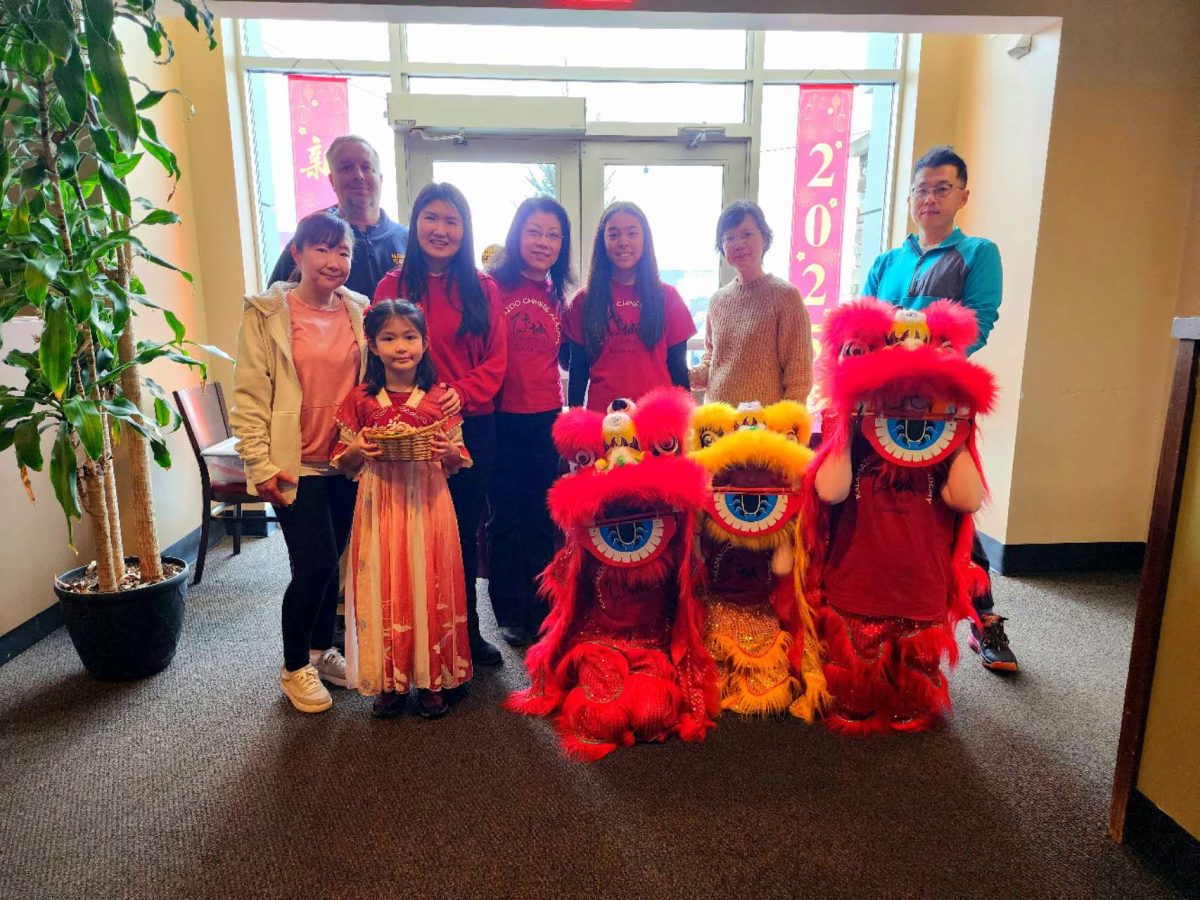
Every year since immigrating from China in 2018, junior Eliza Yuan has been dancing and performing to celebrate Chinese New Year. “This is my favorite part of the year, especially if I get to perform,” she shared, her face lighting up. According to Yuan, the best part of dancing at the Kalamazoo Chinese Academy is getting to teach younger students about China. “There’s a lot…they don’t know,” she said. “So it is really meaningful for me to teach them.” Yuan educates students on Chinese culture and traditions, passing on her knowledge from living in China for 11 years.
Yuan expresses her culture through dance and her family’s celebration of Chinese New Year. “My mom’s side would have a…big dinner together, and then for my dad’s side of the family…we would make dumplings and also have a big dinner,” Yuan shared about her traditions for the Lunar New Year. Chinese New Year (also called Lunar New Year) this year is celebrated on February 17, 2026, with the date changing each year to reflect the cycle of the moon. It’s known as the Spring Festival to many Chinese communities around the world, and is based on a variety of legends in Chinese history. Each year has a specific animal to represent it, stemming from an old Chinese legend that describes 12 animals who “descended from the heavens” in order to celebrate the arrival of spring. 2026 is the Year of the Fire Horse. According to the US Congress’ official website, about 5.4 million people living in the US are of Chinese descent, and some states recognize Chinese New Year as an official holiday. Senior Claire Tong, who also celebrates Chinese New Year, added, “It’s a very prominent holiday [in China] and people usually get a few weeks off to celebrate with friends and family.”
There are a wide variety of traditions that people partake in to celebrate Chinese New Year, with Yuan and Tong both mentioning the red envelopes they receive. “The elders would give the younger ones…the red envelope with money,” Yuan shared. Red envelopes are exchanged between elders and children to wish them good luck for the year to come. Other common traditions of Chinese New Year include setting off fireworks, thoroughly cleaning the house, and honoring ancestors. “My culture is just really important for me,” Yuan said. “I feel like it is also [a way] to see how…our ancestors celebrated this, because, like, some of the traditions go thousands of years back.” Both Yuan and Tong expressed that Chinese New Year keeps them connected to family and Chinese culture. “It’s important to me to celebrate Chinese New Year because it helps me feel connected to my culture,” Tong added.
In recent years especially, Yuan and Tong have recognized the importance of respecting and celebrating other cultures. “The US has always been a salad bowl comprised of cultures from across the world,” Tong explained. “It’s crucial to maintain the traditions of these cultures.”